









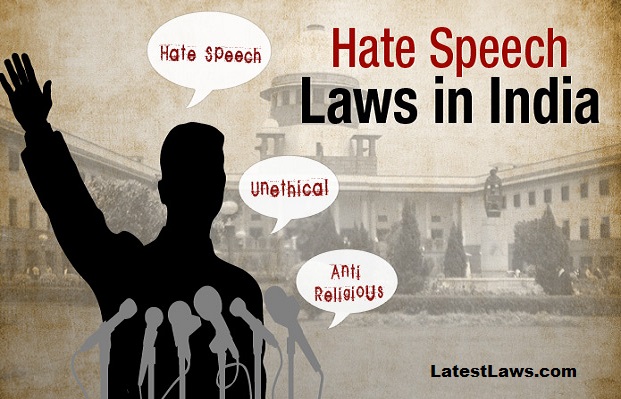
On Wedneday, the Supreme Court expounded that existing laws are sufficient to deal with the issue of hate speeches and no "legislative vacuum" exists warranting intervention.
Apex Court Bench of Justice Vikram Nath and Justice Sandeep Mehta said that creation of criminal offences and the prescription of punishments lies squarely within the legislative domain.
SC Bench added in its verdict that, "The Constitutional scheme founded upon the doctrine of separation of powers does not permit the judiciary to create new offences or expand the contours of criminal liability through judicial directions,".
Apex Court Bench held that, "while constitutional courts may interpret the law and issue directions to secure the enforcement of fundamental rights, they cannot legislate or compel legislation. At the highest, the court may draw attention to the need for reform. The decision whether and in what manner to legislate remains within the exclusive domain of the Parliament and the state legislatures."
SC Bench further added that, "The duty of the police to register an FIR upon disclosure of a cognisable offence is mandatory, as settled in Lalita Kumari. In cases of non-registration of FIR, the CrPC-BNSS provide efficacious remedies. An aggrieved person may approach the Superintendent of Police under Section 154(3) of CrPC or corresponding Section 173(4)of the BNSS and thereafter invoke the jurisdiction of the magistrate under Section 156(3) of CrPC, corresponding Section 175 of BNSS, or proceed by way of a complaint under Section 200 of CRPC, corresponding section 223 of BNSS."
Bench refused to hold that an order directing investigation under Section 156 (3) of the CrPC amounts to taking cognizance within the meaning of Section 190 of CrPC or the corresponding Section 210 of BNSS.
Source PTI
Picture Source :



















